
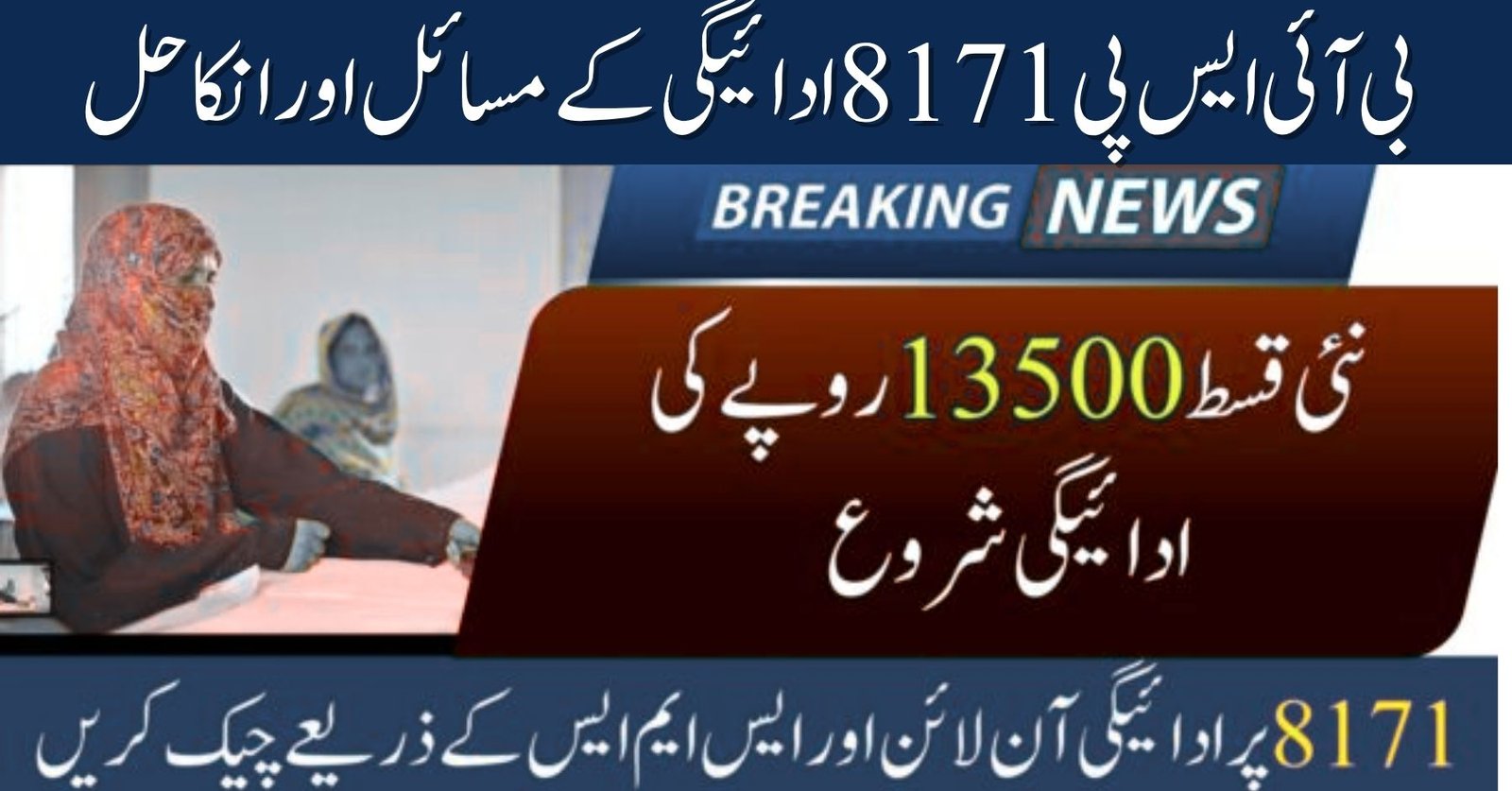
The Benazir Income Support Programme (BISP) 8171 is Pakistan’s largest social protection initiative, supporting millions of families struggling with inflation and poverty. In 2025, the government increased the quarterly installment from Rs. 10,500 to Rs. 13,500, giving households extra relief in difficult economic conditions.
However, despite this increase, many families are still facing payment problems such as biometric failures, CNIC verification issues, delayed district-wise disbursements, and unauthorized agent deductions. This guide covers the latest September 2025 updates, common problems, and practical solutions to help beneficiaries receive their funds smoothly.

Latest BISP 8171 October 2025 Payment Problems and Solutions 2025
- Quarterly installment fixed at Rs. 13,500 per family.
- Double installments (Rs. 27,000) are being released only where payments were delayed in earlier cycles.
- The 8171 portal has been upgraded with a new dashboard where beneficiaries can check:
- Eligibility status
- Payment schedule (district-wise)
- Complaint records
- Payments are being released in phases by district, which means some families may have to wait until their district is included.
- Beneficiaries flagged for dynamic surveys must complete re-verification to continue receiving payments.
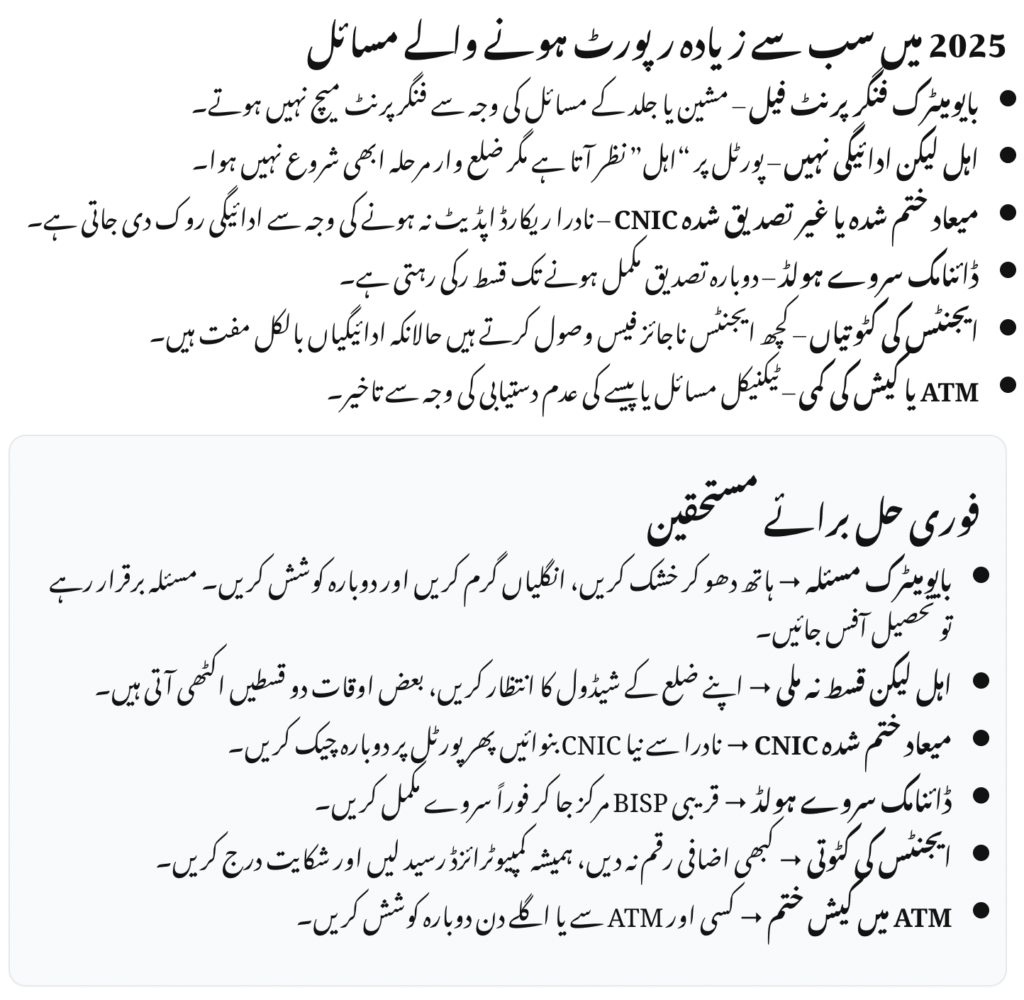
Most Common BISP 8171 Payment Problems in 2025
- Biometric fingerprint mismatch – Scanners fail to recognize fingerprints due to worn-out skin, cold hands, or machine errors.
- Eligible but unpaid status – Many families show as “eligible” on the portal but have not received money yet because their district is not in the current cycle.
- Expired or unverified CNICs – Payments are blocked until NADRA records are updated.
- Dynamic survey hold – Families flagged for re-verification remain on hold until the survey is completed.
- Agent deductions – Some agents demand illegal cuts from payments despite installments being free.
- ATM/cash shortages – Technical errors or limited cash availability cause delays.
Quick Solutions for Beneficiaries
- Biometric failure → Wash and dry your hands, warm your fingertips, retry. If unsuccessful, visit your nearest Tehsil Office.
- Eligible but no payment → Wait for your district’s release; sometimes two installments are combined.
- Expired CNIC → Renew or correct your CNIC at NADRA before rechecking payment.
- Dynamic survey pending → Complete the survey immediately at your BISP center.
- Agent deductions → Never pay extra. Always demand a computerized receipt and report the agent.
- ATM shortage → Try another ATM or return the next day.
Pro Tips to Avoid Future Delays
✔ Keep your CNIC updated and valid.
✔ Ensure your mobile SIM is registered under your CNIC.
✔ Always check the 8171 portal before visiting payment centers.
✔ Complete surveys immediately when notified by BISP.
✔ Follow only official BISP announcements, avoid fake news.
✔ Remember: The official 2025 installment is Rs. 13,500, no less.
FAQs – BISP 8171 October 2025
Why am I eligible but not receiving payment?
Payments are released district by district. Your installment will arrive in your scheduled cycle or as a combined payment later.
What if biometric verification fails?
Retry after washing and warming hands. If still unsuccessful, visit the Tehsil Office for manual verification.

Can I receive payment with an expired CNIC?
No. Payments are blocked until you renew your CNIC at NADRA.
What does a double payment mean?
It means two pending installments (Rs. 27,000) were combined, not a bonus.
Are agents allowed to deduct money?
No. Payments are free. Report unauthorized deductions immediately.

What happens if I ignore the dynamic survey message?
Your payments will remain on hold until you complete the re-verification survey.
Conclusion
The BISP 8171 October 2025 installment of Rs. 13,500 continues to provide vital relief to low-income families across Pakistan. While issues such as biometric mismatches, CNIC problems, and district-wise delays remain, most problems can be solved with simple steps like keeping documents updated, checking the 8171 portal, and avoiding unauthorized deductions.
For millions of households, understanding these solutions and updates can ensure they receive their payments on time without unnecessary stress.